
Pet-Friendly Houses to Rent: How to Search and Get Approved
Searching for pet-friendly houses to rent can feel like a second job. Many listings say “pets OK” and then hide the real rules. You may not see the weight cap, breed ban, or deposit until after you apply. That wastes time and money, and it is hard on you and your animal.
This guide shows you how to rent with pets without guessing. You will learn how to read pet rental policies, where to search, what the first year really costs, and how to present your dog or cat so a landlord says yes. You will also learn how to judge a neighborhood for walks, vet access, and daily life.
The goal is practical. You want houses for rent that allow pets and a lease you can live with. Let’s start with what “pet-friendly” actually means.
What to Check Before You Tour Pet-Friendly Houses to Rent
Every landlord writes a different set of rules. Some welcome most animals. Others allow one small cat and nothing else. Finding pet-friendly rentals is easier when you treat the listing as a first clue, not a promise.
Common restrictions
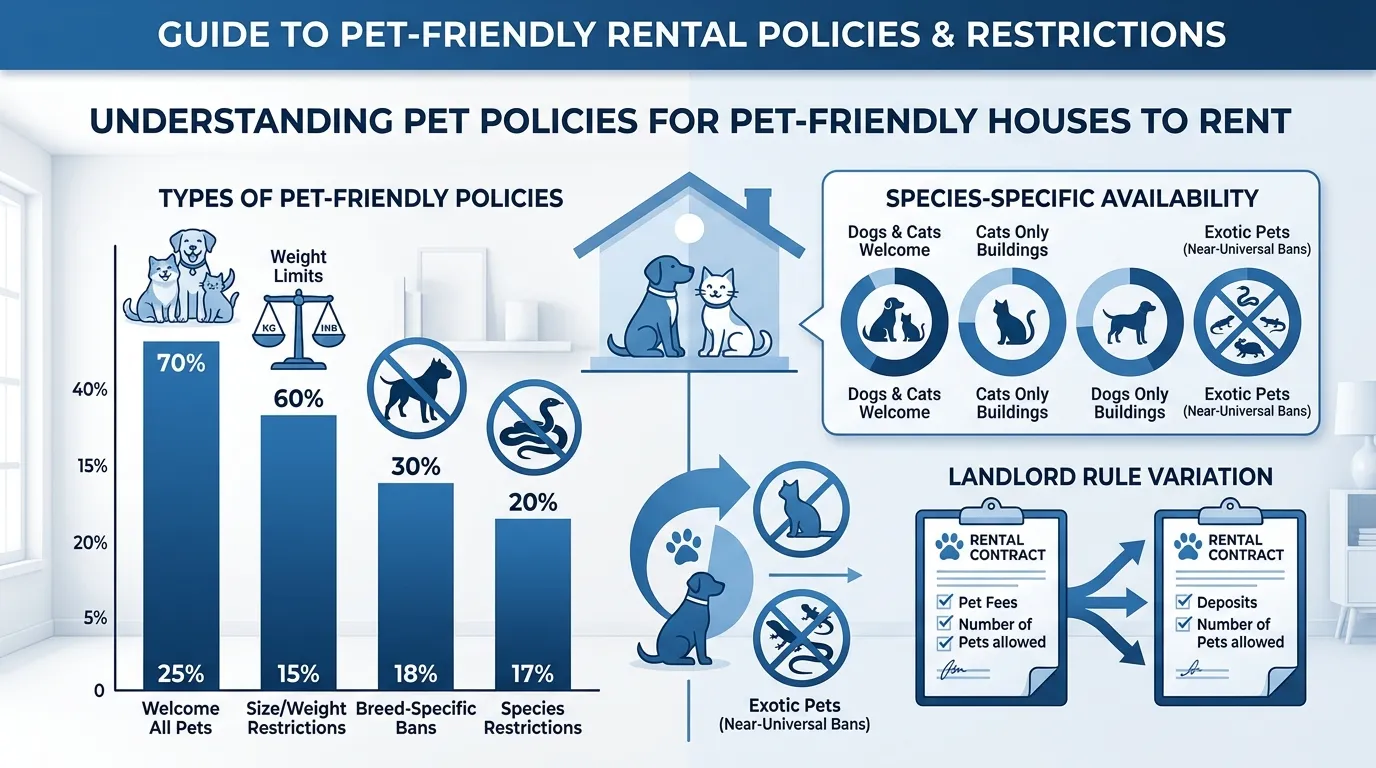
Weight limits show up first. Many homes cap dogs between 25 and 75 pounds. Some stop at 50. If you are renting a house with a dog, ask whether the number is current weight or adult weight. A puppy under the cap can grow past it.
Breed lists often include pit bulls, rottweilers, German shepherds, and huskies. Insurance companies, not the dog’s manners, usually drive those bans. Number caps are common too. Two pets is a typical maximum. Some places are cat-only or dog-only. Exotic pets are almost never allowed.
If you are renting a house with a cat, confirm litter rules, carpet rules, and whether a second cat counts as a second pet fee. Small print matters.
Pet-friendly versus pet-tolerant
A pet-friendly landlord wants your animal there. Rules are written in plain language. You may see a fenced yard, waste stations, or a nearby park mentioned in the ad.
A pet-tolerant landlord will take a pet and then make it expensive or stressful. Fees stack. Inspections feel like a warning. Renewal time becomes a new negotiation. For pet-friendly rental homes, look for owners who talk about pets as part of the household, not as a risk to manage.
Emotional support animals and service animals
Assistance animals are not the same as pets under federal housing law. If you qualify, an emotional support animal or service animal may be exempt from pet deposits and pet rent. You still need proper documentation. A service animal is trained to do specific work for a disability. An ESA needs a letter from a licensed mental health professional.
This is not a shortcut around every rule. A landlord can still act if an animal poses a direct threat or causes major damage. For the housing path, see ESA letters for housing. Emma & Buddy can help you check whether you qualify. We do not guarantee approval.
| Fee type | Refundable | Typical amount |
|---|---|---|
| Pet deposit | Yes, minus damages | $200–$500 |
| Monthly pet rent | No | $25–$75 per month |
| Non-refundable pet fee | No | $100–$300 |
Know which of these apply before you pay an application fee. Some properties charge all three.
Where to Search for Houses That Allow Pets
Finding pet-friendly rentals works best when you use more than one method. Filters help. They do not replace a phone call.
Online listings
Zillow, Redfin, Apartments.com, and similar sites have pet filters. Use them, then read the full text. The filter often means “some pets,” not “your pets.” Look for weight, breed, and fee details. If the listing is silent, message the owner with your pet’s species, weight, age, and training before you apply.
The Humane Society’s housing guide also recommends using more than one site and keeping notes on each property’s rules.
People who already know the landlords
A local agent who works with pet owners can save weeks. They often know which owners accept larger dogs or multiple cats. They can also help you put your best case forward. A landlord is more open when they see the care you already give your pet.
Friends, coworkers, and neighborhood groups help too. A short post on a local Facebook group or Nextdoor with a photo and a calm description can reach owners who never listed online.
Old-school outreach
Drive the streets you like. Call the number on a “For Rent” sign. Many small landlords never pay for a listing. Winter and other slow seasons can give you more room to talk about pets because empty houses cost owners money.
When you call, be specific: “I have one 40-pound mixed-breed dog, six years old, house-trained, with current vaccines.” Vague questions get vague answers.
What Pet-Friendly Rentals Really Cost
The rent on the listing is not the full number. Add pet charges, insurance, and move-out cleaning before you decide a house is in budget.
Deposits, fees, and pet rent
A pet deposit is like a second security deposit. You should get it back if there is no damage. A non-refundable pet fee is a one-time charge you will not see again. Pet rent is a monthly add-on. Over 12 months, $50 in pet rent is $600.
Some owners charge all three. A $300 deposit, a $250 fee, and $50 a month is $1,150 in the first year for one animal. Two pets can double that unless the lease caps the charges.
Costs people miss
Ask about carpet cleaning, yard repair, and required flea treatments at move-out. Some leases require pet liability coverage on your renter’s policy. That can add $10 to $30 a month. None of these are rare. They are just easy to skip when you are excited about the house.
Write a one-page budget: deposit + fee + (monthly pet rent × 12) + extra insurance + a cleaning estimate. If that number plus first month’s rent and the regular security deposit stretches you too far, keep looking.
A simple first-year example
One dog, 12-month lease:
- Pet deposit: $300
- Pet fee: $250
- Pet rent: $50 × 12 = $600
- Extra insurance: $15 × 12 = $180
Total pet-only housing cost: $1,330, before food, vet care, or a crate. That is why the cheapest “pets OK” listing is not always the cheapest home.
How to Improve Your Odds of Approval
Landlords worry about damage, noise, and complaints. Your job is to replace those worries with facts.
Build a pet resume
One page is enough. Include:
- Name, species, breed or mix, age, and weight
- Vaccine record and spay or neuter status
- Training classes or a short note on house manners
- A reference from a past landlord, sitter, or vet
- Two clear photos of a calm, well-groomed animal
Nationwide and other housing guides have long said that photos and records change the conversation. A landlord who can picture a quiet dog on a rug is less likely to picture a chewed door frame.
Offer extra protection
You can offer a larger refundable deposit, a paid carpet cleaning at move-out, or proof of liability coverage. Suggest a 30-day check-in if the owner is nervous. Put any promise in the lease so both sides remember it.
If you can, introduce the pet in person. A short, calm meeting in the yard does more than a breed name on paper.
Time the ask
Talk about pets before you sign. Mid-lease surprises make owners feel tricked. Bring your documents to the showing. Have a clear request: “We would like approval for one 35-pound dog. Here is her resume.”
If you need an ESA letter, start that process early and only if you qualify. Do not treat it as a way around a landlord you have not talked to honestly.
Choose a Neighborhood Your Pet Can Live In
The house is half the decision. The block is the other half.
Walks, parks, and daily movement
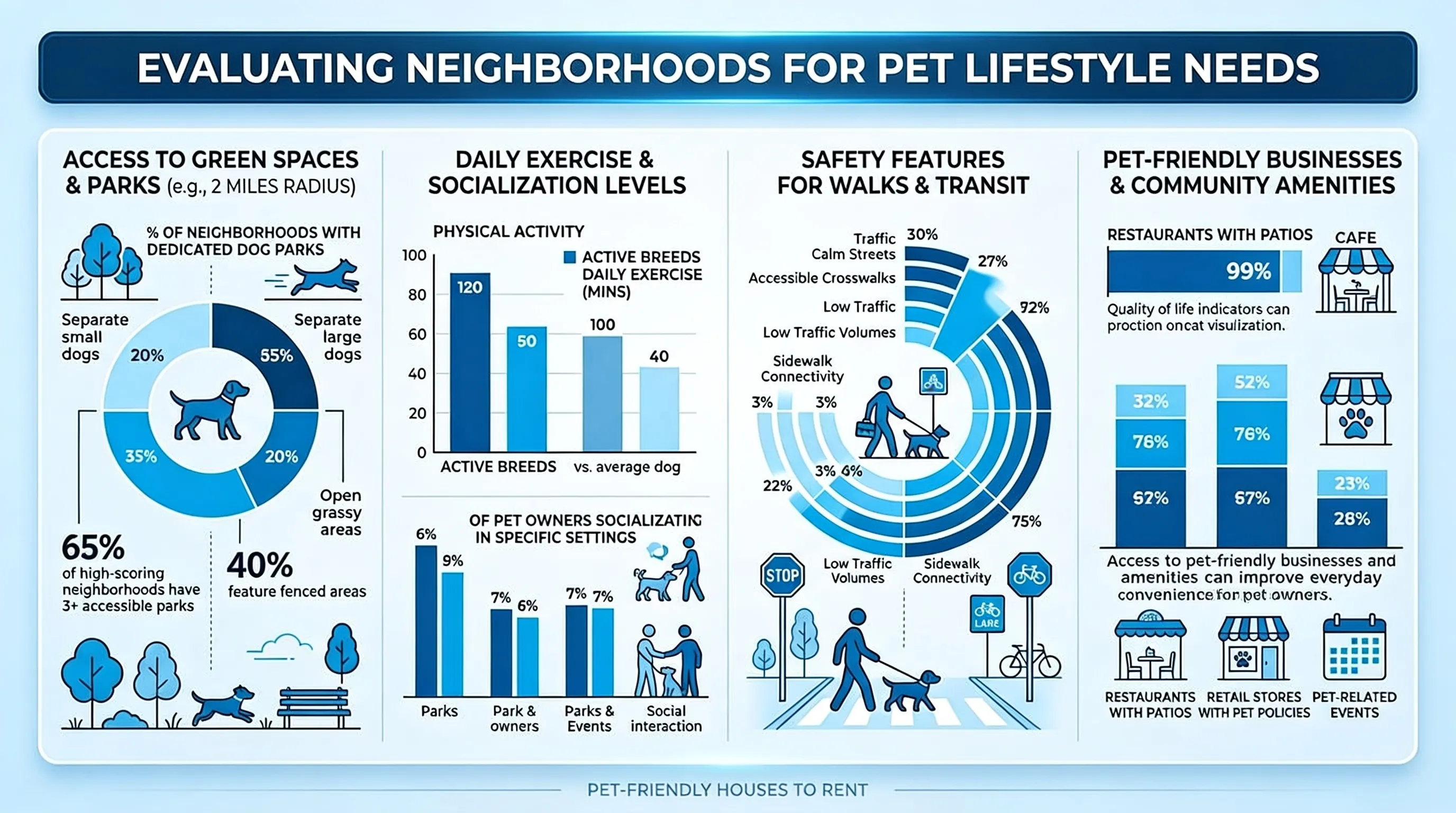
A dog park or trail within a mile or two makes weeknights easier. Sidewalks, street lighting, and a fenced yard matter more than a pretty kitchen if you have a dog. Cats that go outside need a safe plan too. Many renters keep cats indoors and add window perches or a catio instead.
Vets and pet services
Find the nearest emergency clinic and time the drive. Fifteen minutes is a useful target. Note a regular vet, a groomer, and a place to buy food. You will use those more than you think in the first month.
Local rules and daily life
Look up leash laws, waste rules, and HOA limits. Some neighborhoods ban certain breeds even when the landlord does not. Listen for traffic and late-night noise. A stressed pet is harder to keep welcome.
Pet-friendly businesses, such as patio restaurants or a hardware store that allows dogs, are a bonus. They tell you the area is used to animals.
Red Flags in “Pets OK” Listings
Not every listing that mentions pets is a good fit.
Vague language
“Pets negotiable” and “case by case” often mean the owner has not decided. You can still ask. Do not pay a non-refundable application fee until you have a written yes for your specific animal.
Read the lease, not just the ad. An ad can say pet-friendly while the contract bans your breed or charges a fee the listing never mentioned.
Fees that do not make sense
Watch for deposits over $500 per animal, monthly pet rent over $50 with no extras included, and a non-refundable fee stacked on a large deposit. One or two charges can be fair. All of them at the high end is a warning.
Unsafe property conditions
An unfenced yard on a busy street is a risk. So are pest problems that need heavy chemical treatment, poisonous plants, or strong odors from past animals. If the last pet left damage that was never fixed, your deposit is already in danger.
Conclusion
Finding a home that welcomes your pet takes more than a filter on a rental site. Read the policy. Add up the first-year cost. Build a short pet resume. Walk the neighborhood as if you already live there. Say no to vague listings and unsafe yards.
Houses that work for people and animals exist. They go to renters who show up prepared. If you may qualify for an ESA and you need housing documentation, learn how Emma & Buddy works and start only if that path is right for you.
You and your pet need the same thing: a stable place to land. Take the extra hour to check the rules. It is the step that saves the move.






 Ask ChatGPT
  Ask Claude
  Ask Perplexity